“It’s a Nice Product… I’m Not Ever Going to Wear It”: A Founder’s Case Study in Designing for Older Adults
Quick Takeaways
The biggest competitor in AgeTech isn’t another startup — it’s non-adoption.
If a product compromises dignity, it’ll end up in the “Bedside Graveyard.”
The buyer (adult child) and the user (older adult) aim for different things — the design must make both happy.
Wearables fail when they require habit change; ambient tech succeeds when it disappears into the background.
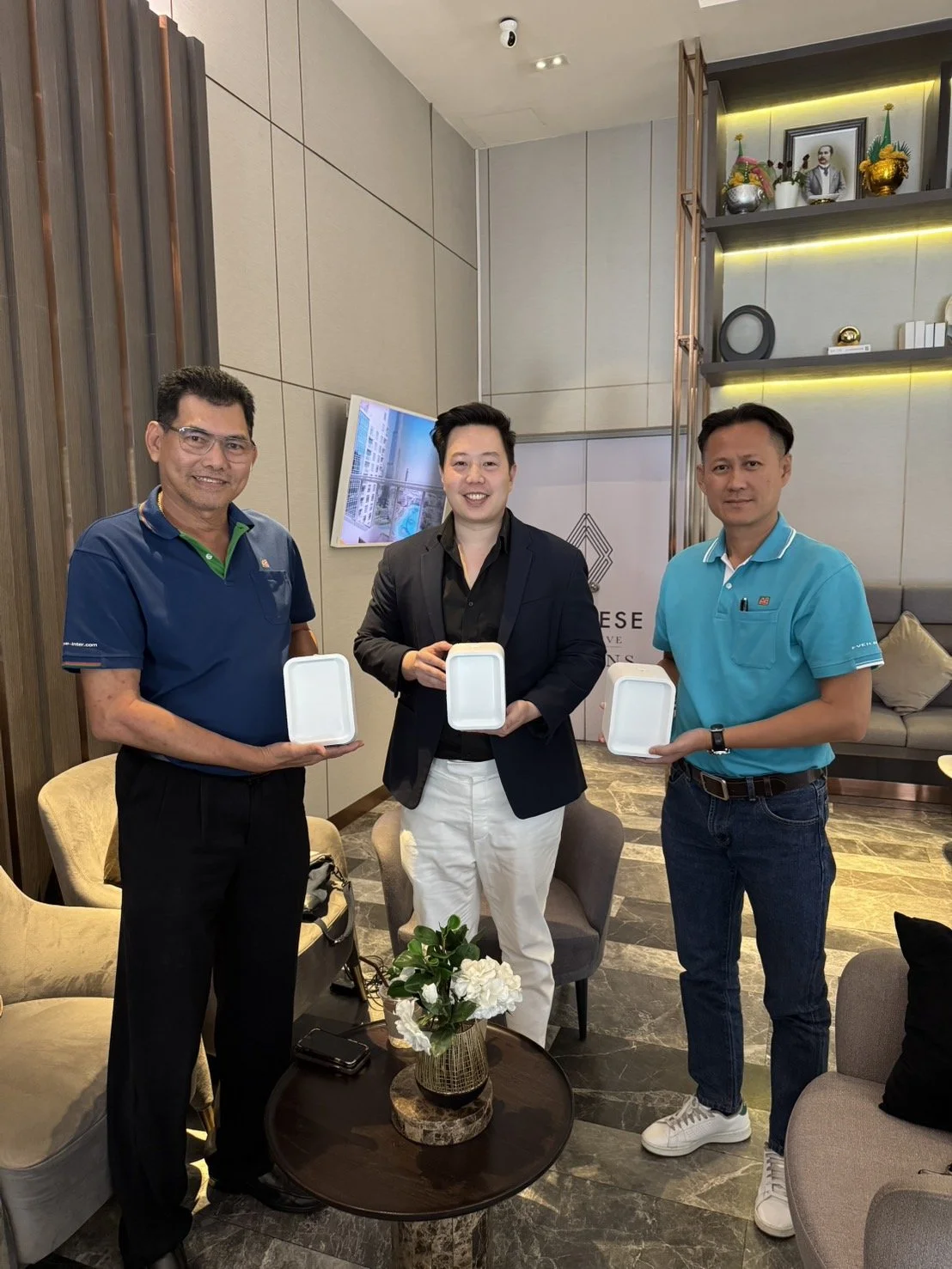
Blue Oak founder, Pattana Lee (center), holds up his product, a fall detection lamp, that uses seismic sensing (earthquake detection technology) to note falls.
The most effective safety products protect lives without reminding users they’re at risk.
The most dangerous competitor in AgeTech isn’t another startup; it’s the bedside drawer. This is where well-meaning safety devices go to die, uncharged and unworn.
Pattana Lee, founder of Blue Oak, learned this hard truth eight years ago. Before he was pioneering touchless fall detection, he was simply a dutiful grandson worried about his grandfather living alone in a hotel room in Chiang Mai.
“My grandpa is a very tough, independent guy,” Lee explains. “We were always worried he was going to fall.”
Lee’s first venture, Watchfully, was the logical answer to that anxiety: a medically perfect wearable backed by government contracts. It was a commercial success on paper, but a failure in reality. Why? Because the seniors refused to put it on. Their feedback was devastatingly simple:
“It’s a nice product… I’m not ever going to wear it.”
That single sentence sparked a pivot that redefines how we think about safety. Lee realized that in the longevity economy, you cannot sell safety if the price is dignity.
The Autonomy Gap
Lee discovered that while the buyer (the adult child) prioritizes safety, the user (the older adult) prioritizes autonomy.
“If anyone has dealt with seniors before, they know it is almost impossible to change their habits,” Lee notes. For an older adult, putting on a medical pendant is an admission of frailty. It is a daily reminder that they are "at risk." After three quarters of trying to force a behavior change that his users resented, Lee shut down Watchfully.
He realized that to truly solve the problem of falls, he didn’t need better sales tactics; he needed technology that respected the user's desire for privacy and normalcy.
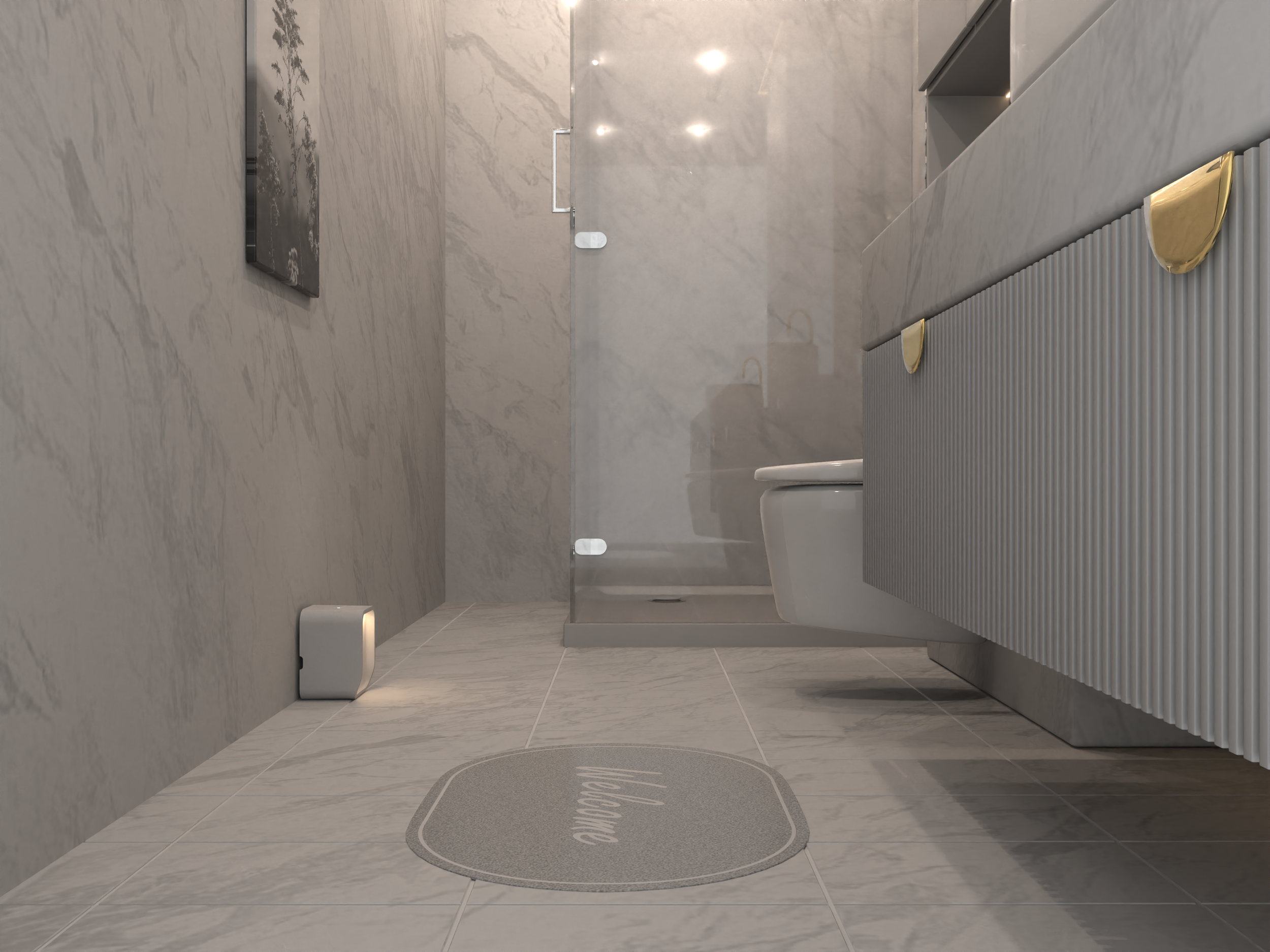
Blue Oak’s sleek fall detection lamp design adds style to the bathroom pictured above.
The "Goldilocks" Problem of Fall Detection
Lee’s pivot led him to a partnership with researchers from Carnegie Mellon University and experts in vibration systems. The result was Blue Oak, a device that uses seismic sensing—essentially earthquake detection technology—to identify falls within a home.
In developing Blue Oak, Lee identified the three fatal flaws of existing categories:
Wearables: As Lee learned the hard way, these suffer from compliance issues. Furthermore, 80% of falls happen in the bedroom or bathroom, often at night when wearables are taken off to charge.
Cameras: While accurate, they are invasive. “It doesn’t matter if you say you anonymize the face,” Lee says. “It invades privacy.” Putting a camera in a bathroom is a non-starter for preserving dignity.
Radar: While promising, radar struggles with the "multipath problem" in indoor settings, where signals bounce off walls. Lee cites a partner study in Singapore where radar devices registered 2,000 fall alarms in 18 months—but only two were real falls. That is a 99.9% false alarm rate.
Blue Oak’s solution bypasses all three. By detecting structural vibrations, the device is ambient. It looks like a simple nightlight, plugs into a wall, and requires zero interaction from the user.
Converting "Medical" to "Modern"
A key component of Blue Oak’s philosophy is resisting what the MIT AgeLab calls the "3 B’s" of senior products: Beige, Big, and Boring.
“If you put it in your room, you don’t [want to] feel old,” Lee says. “Why should we make them feel old?”
This design-first approach is particularly vital for female users. Lee’s market research found that while male users often prioritize specs and function, female users prioritize aesthetics and how a product integrates into their home environment. If a device looks like medical equipment, it feels like an alien object. If it looks like a piece of modern furniture, it is welcomed.
Currently, the Blue Oak device doubles as a nightlight—a feature that not only masks the sensor but actively prevents falls by lighting the path for seniors who may wake up disoriented.
The Complexity of the Ecosystem
For other founders entering the space, Lee offers a sober reminder: The ecosystem is more complex than B2C.
“You need to work with caretakers, you need to work with families who are the buyers, and you need to work with the users,” Lee advises. Successful AgeTech doesn't just solve a technical problem; it navigates a web of stakeholders including nurses, facility operators, and regulators.
A Bell Ringing Every Second
Despite the challenges of hardware, compliance, and complex sales cycles, Lee is driven by the sheer scale of the impact. He references an old Amazon tradition where Jeff Bezos would ring a bell every time a book was sold.
“What if, in Blue Oak’s case,” Lee explains, “the bell rings not for a sale, but when a fall is detected?”
“Senior falls happen so often around the world,” Lee says. “We estimate that if we can penetrate just 12.5% of the global market... the bell would ring every second.”
That is a life saved every second.
But getting there requires more than just accurate sensors. As Blue Oak’s journey proves, saving lives starts with respecting the life being lived. It means building products that offer safety without asking seniors to sacrifice their dignity to get it.
